For 1 kg of meat you need 15 g of salt, 300–400 g of onions and no more than 30 ml of acid, either lemon juice or 9% vinegar. Lean meat also gets 20–30 ml of oil. Marinate pork neck this way for 6–12 hours in the fridge, chicken thighs for 2–6 hours. All five shashlik (skewered grilled meat) recipes below are written for exactly 1 kg of meat, in grams and millilitres, so they are easy to scale up.
Recipes on this page:
- Classic onion marinade for pork neck
- Kefir marinade for pork
- Chicken thigh marinade with lemon and paprika
- Onion and coriander marinade for lamb or beef
- Soy sauce and honey marinade
If you only need the times, go straight to the marinating time table.
How long should you marinate shashlik?
Pork neck needs 6–12 hours, chicken 2–6 hours, lamb and beef 6–12 hours, always in the fridge. You can leave it in the fridge for longer, but after two days the acid can start to break down the meat fibres and the meat turns mushy. The upper limit is set by texture: the more acid in the marinade and the leaner the meat, the shorter the time.
| Meat and cut | Piece size | Salt per 1 kg | Marinate | If left too long |
|---|---|---|---|---|
| Pork neck | 4 cm cubes (about 60 g) | 15 g | 6–12 h, 24 h at most | With vinegar or lemon the surface turns mealy. Without acid the meat gets saltier and denser. |
| Pork loin | 3–4 cm cubes | 12–13 g | 3–6 h, 12 h at most | Lean meat firms up in acid and cooks up dry. |
| Boneless chicken thighs | 4–5 cm pieces | 13–14 g | 2–6 h, up to 12 h in kefir | The surface goes mushy and pieces fall off the skewer. |
| Chicken breast | 3 cm cubes (about 30 g) | 12 g | 1–3 h, 6 h at most | The surface goes mushy, and the lean meat dries out fast. |
| Beef sirloin | 3 cm cubes | 12–14 g | 4–12 h, 24 h at most | The acid “cooks” the surface: it turns grey and tough. |
| Leg or shoulder of lamb | 3–4 cm cubes | 14–15 g | 6–12 h, 24 h at most | Same as pork neck: mealy surface with acid, saltier meat without it. |
What do salt, acid, onions, oil and sugar do in a marinade?
A marinade seasons the surface of the meat; only salt goes deeper. The cooks at America's Test Kitchen marinated chicken breasts in soy sauce, yoghurt, wine and lemon juice with garlic, and every time the flavour stayed in the first few millimetres. That is why shashlik is cut into cubes: in a small piece, those few millimetres reach every bite.
Salt reaches the centre and keeps the juices in
Salt is the one part of a marinade that travels inwards. Measurements by Prof. Greg Blonder, cited by AmazingRibs.com, show it takes almost a day to reach a depth of 2.5 cm. The centre of a 4 cm cube is 2 cm from the surface, so the salt needs several hours. America's Test Kitchen explains that salt changes the meat's proteins so they contract less during cooking, which keeps the meat juicier. The common advice to salt only just before grilling, so the salt does not “draw out the juices”, does not suit shashlik. Salt does pull out a little liquid at first, but the meat later reabsorbs it, salt included.
Use a little acid, and not for long
Vinegar and lemon juice only act on the surface. They break down the proteins there, and the longer the meat sits in acid, the softer its outside becomes, while lean cuts firm up. AmazingRibs.com advises keeping acid to no more than an eighth of the marinade and using it for flavour only. I use 15–30 ml per kilogram of meat. Kefir and yoghurt are more mildly acidic, so meat can stay in them longer, from a few hours up to a day. Acid does not protect against bacteria, as food safety specialists at the University of Illinois stress.
Onions provide liquid and aroma
Onion juice is a liquid without sharp acidity that dissolves the salt, and it carries the aroma people recognise as shashlik. Slicing onions into rings does not give you much juice, so I grate some of them and squeeze the rest together with the salt, which draws the liquid out. Do not expect onions to work wonders as a tenderiser. Pork neck is tender because of its fat, and no marinade will make a tough cut tender.
Oil carries the flavour of spices and helps browning
Oil does not soak into meat, because meat is mostly water. What it does is dissolve the aromas of paprika, coriander and other spices, and it helps the surface brown nicely. Pork neck does not need any; lean chicken or beef needs 20–30 ml per kilogram. Any excess drips onto the embers, flares up and leaves soot on the meat.
Sugar and honey brown well but burn quickly
According to America's Test Kitchen, sugar starts to brown at around 120 °C. Over hot embers a sweet marinade chars while the inside of the piece is still raw. Beata Nicholson advises readers of LRT, Lithuania's public broadcaster, to grill honey marinades over lower heat. I add no more than 20 g of honey per kilogram, and if people want something sweeter, I serve it at the table: see my barbecue sauce recipes.
5 shashlik marinade recipes for 1 kg of meat
All quantities are for 1 kg of boneless meat. In the first four, salt is 1.4–1.6% of the meat's weight; in the fifth, soy sauce replaces part of it. The cut matters more than the marinade, so before you shop, read how to choose meat for a barbecue party.
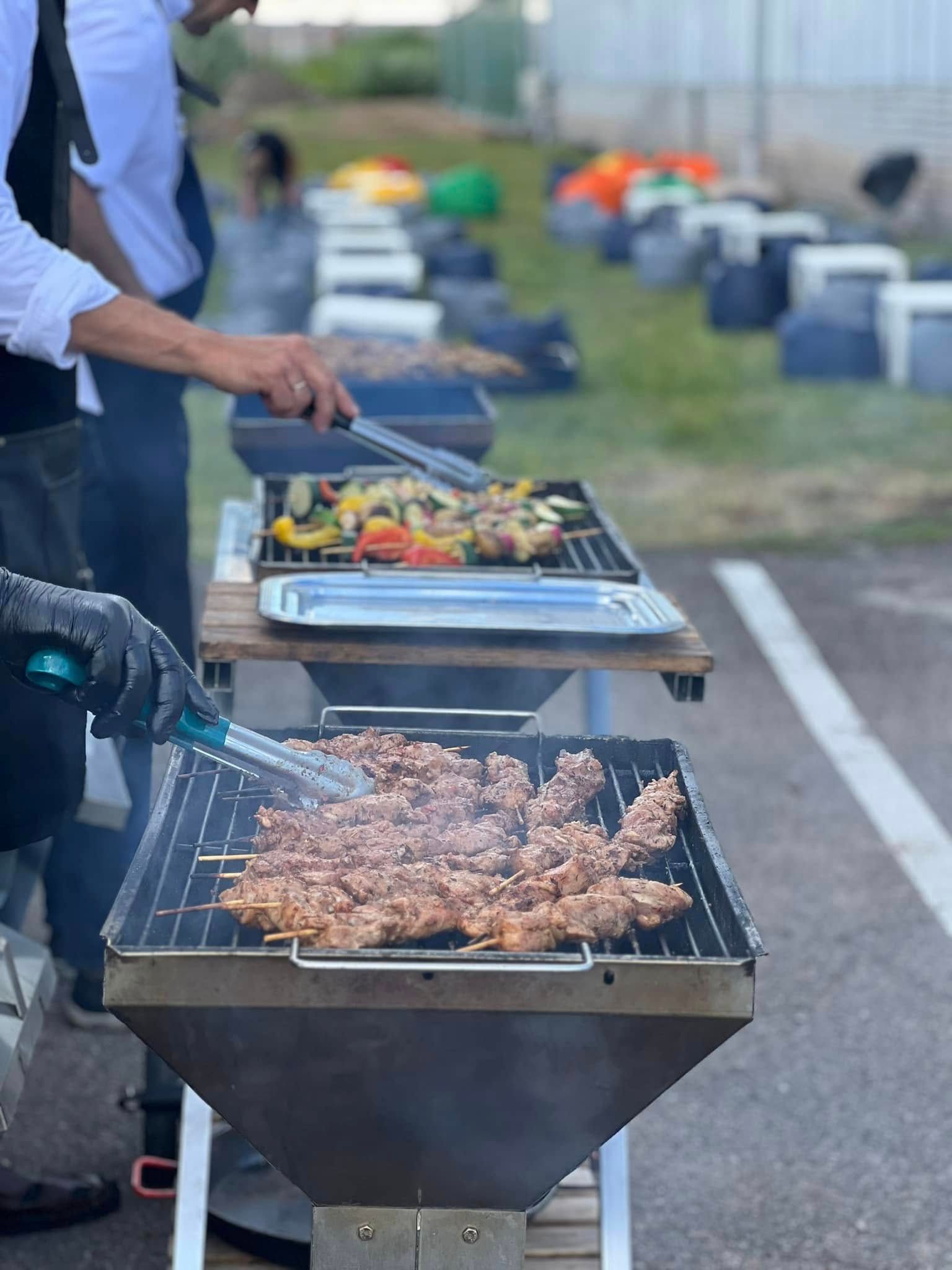
1. Classic onion marinade for pork neck
1 kg pork neck, serves about 4
- Marinate
- 6–12 h
- Grill
- 12–16 min
- Salt
- 1.5% of meat weight
Ingredients
- 1 kgpork neck (collar), cut into 4 cm cubes
- 400 gonions (about 4 medium)
- 15 gsalt
- 3 gfreshly ground black pepper (about 1 tsp)
- 2bay leaves
- 20 ml9% vinegar, diluted in 100 ml cold water (optional)
Method
- Coarsely grate half the onions and slice the other half into 5 mm rings.
- Put the meat in a glass or stainless steel bowl. Add the salt, pepper and grated onion, then work it in with your hands for 2–3 min until the salt dissolves.
- Mix in the onion rings and the bay leaves, broken in half. If you are using vinegar, dilute it first and then pour it in.
- Cover and refrigerate for 6–12 h. Stir once halfway through.
- Before grilling, scrape off the onions, pat the pieces dry with kitchen paper and thread them onto skewers, leaving a few millimetres between pieces.
- Grill over embers with no flame for 12–16 min, turning every 2–3 min, until the centre of a piece reaches 70–75 °C. Rest for 5 min off the heat.
Notes. Cook the onion rings from the marinade separately, in a grill basket or a frying pan: they have touched raw meat, so they cannot be eaten raw. If you do not like vinegar, use 100–150 ml of sparkling mineral water instead of the vinegar and water. The marinade then has no sharp acidity at all, and the meat can stay in it for up to 24 hours.
2. Kefir marinade for pork
1 kg pork neck, serves about 4
- Marinate
- 8–12 h
- Grill
- 12–16 min
- Salt
- 1.6% of meat weight
Ingredients
- 1 kgpork neck, cut into 4 cm cubes
- 400 mlkefir (2.5% fat)
- 300 gonions, sliced into half-rings
- 16 gsalt
- 10 ggarlic (2 cloves), crushed
- 3 gfreshly ground black pepper
- 2 gground coriander (1 tsp)
Method
- In a bowl, rub the meat with the salt, pepper, coriander and garlic.
- Squeeze the onions with your hands so they release their juice, then mix them into the meat.
- Pour in the kefir and stir so that every piece is submerged.
- Cover and refrigerate for 8–12 h.
- Before grilling, scrape the kefir and onions off the meat, pat the pieces dry with kitchen paper and thread them onto skewers.
- Grill over embers for 12–16 min, turning every 2–3 min, until the centre of a piece reaches 70–75 °C. Rest for 5 min off the heat.
Notes. There is 1 g more salt here than in the classic recipe, because some of it stays in the kefir you throw away. Kefir left on the grate burns faster than the meat itself, so wipe the pieces carefully. The same marinade works for chicken thighs: use 14 g of salt and marinate for 3–12 h.
3. Chicken thigh marinade with lemon and paprika
1 kg boneless chicken thighs, serves about 4
- Marinate
- 2–6 h
- Grill
- 12–15 min
- Salt
- 1.4% of meat weight
Ingredients
- 1 kgboneless, skinless chicken thighs, cut in half
- 14 gsalt
- 30 mllemon juice (about half a lemon)
- 30 mlvegetable oil
- 20 gmustard (1 tbsp)
- 15 ggarlic (3 cloves), crushed
- 6 gsweet paprika (1 tbsp)
- 2 gdried oregano (2 tsp)
- 2 gground black pepper
Method
- In a bowl, mix everything except the chicken and stir until the salt dissolves.
- Add the chicken and toss so that every piece is coated.
- Cover and refrigerate for 2–6 h.
- Soak wooden skewers in water for 30 min. Thread each row of meat onto two parallel skewers so the pieces do not spin when you turn them.
- Grill over medium-hot embers for 12–15 min, turning every 2–3 min, until the thickest part reaches 75 °C.
Notes. Thighs are more forgiving than breast because they contain more fat. For breast, use the same marinade but for no longer than 3 h, and grill it for less time. The most reliable way to check whether chicken is done is a thermometer in the thickest part of a piece.
4. Onion and coriander marinade for lamb or beef
1 kg leg of lamb or beef sirloin, serves about 4
- Marinate
- 6–12 h
- Grill
- 8–12 min
- Salt
- 1.4% of meat weight
Ingredients
- 1 kgleg of lamb or beef sirloin, cut into 3–4 cm cubes
- 300 gonions, coarsely grated
- 14 gsalt
- 30 mlvegetable oil
- 20 mllemon juice
- 10 ggarlic (2 cloves), crushed
- 4 gground coriander (2 tsp)
- 2 gground cumin (1 tsp)
- 3 gfreshly ground black pepper
Method
- In a bowl, rub the meat with the salt, coriander, cumin and pepper.
- Add the grated onion, garlic, oil and lemon juice. Work it all together with your hands for 2–3 min.
- Cover and refrigerate for 6–12 h.
- Before grilling, scrape off the onion, pat the meat dry and thread it onto skewers.
- Grill over hot embers for 8–12 min, turning every 2 min. The minimum safe internal temperature is 63 °C; once the meat reaches it, take it off the heat and let it rest for another 3 min.
Notes. Cumin and caraway are different spices; this recipe needs cumin. For beef, choose a tender cut, because a marinade will not soften a tough one. I write more about lamb cuts and how to grill them in my article on grilling lamb.
5. Soy sauce and honey marinade
1 kg pork neck or boneless chicken thighs
- Marinate
- 3–8 h
- Grill
- 12–16 min
- Heat
- medium
Ingredients
- 1 kgpork neck in 3–4 cm cubes, or boneless chicken thighs
- 60 mlsoy sauce
- 5 gsalt
- 20 ghoney (1 tbsp)
- 20 mlvegetable oil
- 15 mlcider vinegar or rice vinegar
- 15 ggarlic (3 cloves), crushed
- 15 gfresh ginger, grated
- 2 gground black pepper
Method
- In a bowl, mix the soy sauce, salt, honey, oil and vinegar. Stir until the honey and salt dissolve, then add the garlic, ginger and pepper.
- Add the meat and stir.
- Cover and refrigerate: pork for 3–8 h, chicken for 2–4 h.
- Pat the meat dry with kitchen paper and thread it onto skewers.
- Grill over medium embers, away from the hottest spot, for 12–16 min. Turn every 1–2 min, because honey burns quickly. Pork should reach 70–75 °C, chicken 75 °C.
Notes. Soy sauce is salty, so this recipe has only 5 g of salt. The exact salt content of the sauce is on the label; if yours is reduced-salt, add a few more grams. The honey is the reason I grill this shashlik over gentler heat and turn it more often than the others.
How to marinate and grill safely
Raw marinated meat is a perishable food, and the marinade does not change that. I follow six rules, and for each one I note who recommends it.
- Marinate in the fridge, not on the worktop. Both FSIS and the University of Illinois say so. An acidic marinade does not kill bacteria.
- Use the right container. Glass, stainless steel, food-grade plastic or a sealed bag all work. AmazingRibs.com warns that aluminium, cast iron and copper react with acid and salt.
- Do not pour used marinade over cooked meat. VMVT advises against using marinades and sauces that have been in contact with raw meat. If you want to baste the meat while it grills, FSIS suggests setting some marinade aside beforehand or boiling the used marinade for a few minutes.
- Keep separate kit for raw and cooked meat. The UK Food Standards Agency recommends separate utensils, plates and chopping boards. Swap the tongs you used for raw meat for clean ones.
- Keep the meat cold until it goes on the grill. Take it to the countryside in a cool bag and only take out as much as you will put on the grill straight away. VMVT points out that food should not sit at room temperature for more than 2 hours, or more than an hour when it is above 30 °C outside.
- Measure the temperature. VMVT's general advice is at least 75 °C in the centre of the dish. The USDA gives 74 °C for poultry and 63 °C with a 3-minute rest for whole cuts of pork, beef and lamb. You will find all the figures in my cooking temperature chart.
Which mistakes ruin shashlik?
These six mistakes come up most often. All of them can be fixed without spending anything extra.
- Too much vinegar. A glass of vinegar per kilogram of meat turns the surface mealy overnight. 20–30 ml diluted in water is enough.
- Salting at the last minute. Salt sprinkled on just before grilling stays on the surface, and the inside ends up bland and drier. Salt at the start of marinating.
- Wet meat on the skewer. While liquid is steaming off the surface, the meat stews instead of browning. Scrape off the onions and pat the pieces dry with kitchen paper.
- Packing the skewer too tightly. Pieces pressed together stay grey on the sides, and by the time the inside is cooked, the edges have dried out. Leave a few millimetres between them.
- Grilling over flames. Flames scorch the outside while the inside is still raw. Wait until the coals are covered in grey ash, and deal with flare-ups from dripping fat by lifting or moving the skewers. I write more about controlling the heat in my article charcoal or gas grill.
- Hoping the marinade will rescue the meat. Tests by America's Test Kitchen show that a marinade does not make a tough cut tender. For shashlik, buy pork neck, chicken thighs or another tender, fattier cut.
How much meat should you buy?
That depends on the number of guests, their appetites and what else is on the table, and meat also loses some of its weight as it cooks. The meat quantity calculator takes all of this into account and tells you how many kilograms of raw meat to buy. Multiply the recipe quantities by that number and you have your shopping list.
Frequently asked questions
How much salt do I need per 1 kg of shashlik?
Use 12–16 g of salt per kilogram of boneless meat, which is 1.2–1.6% of the meat's weight. For pork neck 15 g works well, for chicken 13–14 g. A teaspoon holds a different amount of fine salt than of coarse salt, so weighing it on kitchen scales is the most reliable way. Add the salt at the start of marinating, because it needs a few hours to work its way in.
How long should I marinate pork shashlik?
Marinate pork neck cut into 4 cm cubes for 6–12 hours in the fridge. The easiest plan is to marinate it in the evening and grill it for lunch the next day. If the marinade contains vinegar or lemon juice, do not go past 12 hours, because the acid turns the surface of the meat mealy. In an onion or kefir marinade, pork neck can stay for up to 24 hours.
How long should I marinate chicken shashlik?
Boneless chicken thighs need 2–6 hours in the fridge, chicken breast 1–3 hours. Chicken is more delicate than pork, so its surface goes mushy in acid sooner. In a kefir or yoghurt marinade, thighs can stay overnight, up to 12 hours. Grill until a thermometer in the thickest part reads 75 °C.
Can I marinate shashlik for two days?
From a safety point of view, yes, provided the meat stays in the fridge the whole time. The US Food Safety and Inspection Service (FSIS) says longer marinating is safe, but after two days the marinade can start to break down the meat fibres and the meat turns mushy. Pork neck has the best texture after 6–12 hours of marinating, 24 hours at most.
Does a shashlik marinade need vinegar?
No. Pork neck is tender without acid, and juiciness comes from the salt and from not overcooking the meat. Vinegar adds a sour taste. If you like it, 20–30 ml of 9% vinegar diluted in 100 ml of water is enough for 1 kg of meat, for no longer than 12 hours. Kefir or lemon juice is a milder option.
Can I use a marinade that held raw meat as a sauce?
Not raw. Lithuania's State Food and Veterinary Service (VMVT) advises against using marinades and sauces that have been in contact with raw meat. If you want to baste the meat on the grill, set some marinade aside before adding the meat, or boil the used marinade for a few minutes, as the US FSIS recommends. The same goes for onions from the marinade: they have to be cooked.
Sources
- USDA Food Safety and Inspection Service: Grilling and Food Safety— marinating in the fridge, marinating times, boiling used marinade, safe internal temperatures
- State Food and Veterinary Service (VMVT): Key tips for outdoor grilling as the season gets going (5 July 2019, archived copy) (in Lithuanian)— 75 °C, the 2-hour rule, marinades after contact with raw meat
- Food Standards Agency: BBQ food safety (updated 31 July 2026)— separate utensils, plates and chopping boards for raw and cooked meat
- University of Illinois Extension: Marinating— acid in a marinade does not kill bacteria; containers for marinating
- America's Test Kitchen: Marinating Tips for Success— test of how deep marinade flavour penetrates
- America's Test Kitchen: The Science of a Smart Marinade— the role of salt, acid, oil and sugar
- Meathead, AmazingRibs.com: Marinade Myths And How To Add Flavor More Effectively (updated 17 June 2025)— penetration depth, Prof. Greg Blonder's salt measurements, acid, sugar, wet surfaces
- Catherine Hu, Discover Magazine: Science of Marinades (2015)— osmosis, dairy-based marinades
- Amal Ahmed, Popular Science: Yogurt marinades make meat perfectly tender— comments from Ted Russin, head of food science at the Culinary Institute of America
- Beata Nicholson, LRT.lt: Three marinades for meat and fish for a summer weekend (22 June 2018) (in Lithuanian)— honey in marinades and lower heat